By David Bressoud @dbressoud
As of 2024, new Launchings columns appear on the third Tuesday of the month.
Last month I completed a series of thirteen columns on ``Calculus for Teachers'' in which I explored some of the deeper origins and understandings of common topics in university calculus. These included Continuity (December 2024), the Mean Value Theorem (January 2025), the Definite Integral (February), the Fundamental Theorem of Integral Calculus (March), Uniform Continuity (April), Completeness (May), the basics of calculus on the Complex Plane (June through September), and an introduction to Elliptic Functions (October through December). These are all topics that did not fully emerge until the 19th century, the age of rigor when calculus was transformed into analysis. I believe it is important for those who teach calculus to know this story. But what about our students? How much of this should they be taught and held responsible for in the first year of calculus?
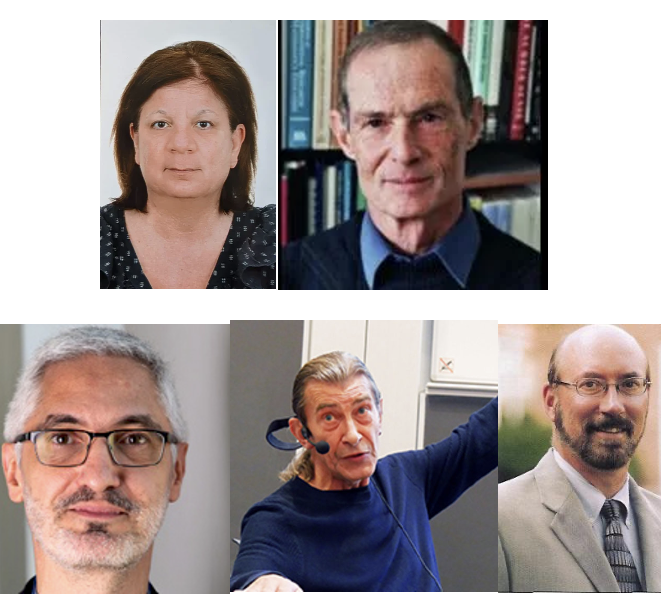
This question came to the fore when I was asked to write a summary piece for a collection of articles in Making meaning through, and for, Calculus in Biology, Chemistry, Economics, Engineering and Physics, a Special issue of the International Journal of Research in Undergraduate Mathematics Education (IJRUME) on what students' need from first-year calculus. Written in collaboration with specialists in undergraduate mathematics education, these articles express the opinions of experts in undergraduate education in the fields of biology, chemistry, economics, engineering, and physics. What I found most striking was the strong and common belief that their students do not need rigor. Only the engineering educator was bold enough to state it explicitly, but all seemed to agree that calculus as it was understood and practiced before 1800 was what they wanted taught. Informal reasoning and practical applications are what they value. Forget about precise definitions and arguments built on limits.

Their vision of what calculus instruction should be includes a total rejection of limits, replaced by the 18th century underpinnings of calculus based on differentials. In the 19th century, this reliance on differentials was recognized as insufficient because it failed to provide a basis for understanding the apparent difficulties and inconsistencies of calculus that were emerging: continuous functions that are not integrable, derivatives that are not continuous, nowhere continuous functions that are still integrable, continuity only at a single point. But these are difficulties and inconsistencies that few scientists will ever encounter. For good reason, they do not arise in the standard first-year calculus curriculum. Precise definitions of limits, continuity, differentiability, and integrability are largely irrelevant. The proofs that are presented in the first year of calculus are seldom complete, presenting a suggestion of rigor that does not really exist. The results of these proofs that are needed for modeling real-world situations are generally intuitive and easily remembered.
When Leibniz first introduced differentials and the accompanying notation he was at pains to explain that while he referred to them as infinitesimals, he thought of them as quantities that could be brought arbitrarily close to zero. His successors, especially the Bernoulli brothers, embraced them as infinitesimals. Throughout the 18th century they were freely employed with a significance that drifted between actual infinitesimals and small differences that could be made as small as one wished. Although the article on Calculus for Physics stressed the importance of distinguishing between differentials and infinitesimals, the authors of the papers on Calculus for Economics and for Engineering are not as clear in their distinction, emphasizing that their students can effectively build a conceptual understanding of calculus based on differentials that are simply viewed as incredibly small.
One finds support for this view in Richard Courant's Differential and Integral Calculus where he asserts that
'`The physicist, the biologist, the engineer, or anyone else who has to deal with these ideas in practice, will therefore have the right to identify the difference quotient with the derivative within his limits of accuracy. The smaller the increment h = dx of the independent variable, the more accurately can he represent the increment Δy = f(x+h)-f(x) by the differential dy = hf'(x). So long as he keeps within the limits of accuracy required by the problem, he is accustomed to speak of the quantities x=h and dy = hf'(x) as ``infinitesimals''. These ``physically infinitesimal'' quantities have a precise meaning. They are finite quantities, not equal to zero, which are chosen small enough for the given investigation, e.g. smaller than the fractional part of a wave-length or smaller than the distance between two electrons in an atom; in general, smaller than the degree of accuracy required.'' (Courant, pp. 108--109)
Rather than limit and rigor, calculus students heading into economics, engineering, or the sciences need extensive experience working with applications, not the cookbook examples found in standard calculus texts but true challenges to model real-world phenomena. This is very much in line with the call for evidence-based reforms which include engagement and active learning in the classroom.
Related to this is the common insistence by these authors on the importance of units. Without attention to units, students can miss the fact that the derivative expresses a ratio. Moreover, the $dx$ at the end of an integral is not simply an indicator of the variable of integration. It carries an essential unit that is needed to turn a rate of accumulation into the total quantity that has accumulated. Too often calculus is taught as if units are tacked on as optional baggage. In reality, they are essential to understanding how one would use the derivative and integral.
Our experience at Macalester College suggests that regular dialog with members of these partner disciplines can spur changes around the edges: a greater emphasis on units, a bit less time spent on limits, additional opportunities for student modeling projects within the course. But to effectively transform calculus into a course designed to meet the needs of the overwhelming majority of our students we needed to have someone who was not a mathematician but who has done calculus-based mathematical modeling within their discipline. What enabled our transformation with the mathematics faculty was their vision of what calculus instruction should be. In other words, we needed to breach traditional disciplinary boundaries.
References
Courant, R. (1937). Differential and Integral Calculus. Translated by E. J. McShane. 2nd edition. Blackie & Son
Nardi, E., Dreyfus, T., González-Martín, A. S., Monaghan, J., and Thompson, P. (Eds.) (2026) Making meaning through, and for, Calculus in Biology, Chemistry, Economics, Engineering and Physics; to appear as a Special issue of the International Journal of Research in Undergraduate Mathematics Education

David Bressoud is DeWitt Wallace Professor Emeritus at Macalester College and former Director of the Conference Board of the Mathematical Sciences. Information about him and his publications can be found at davidbressoud.org