Victor Piercey
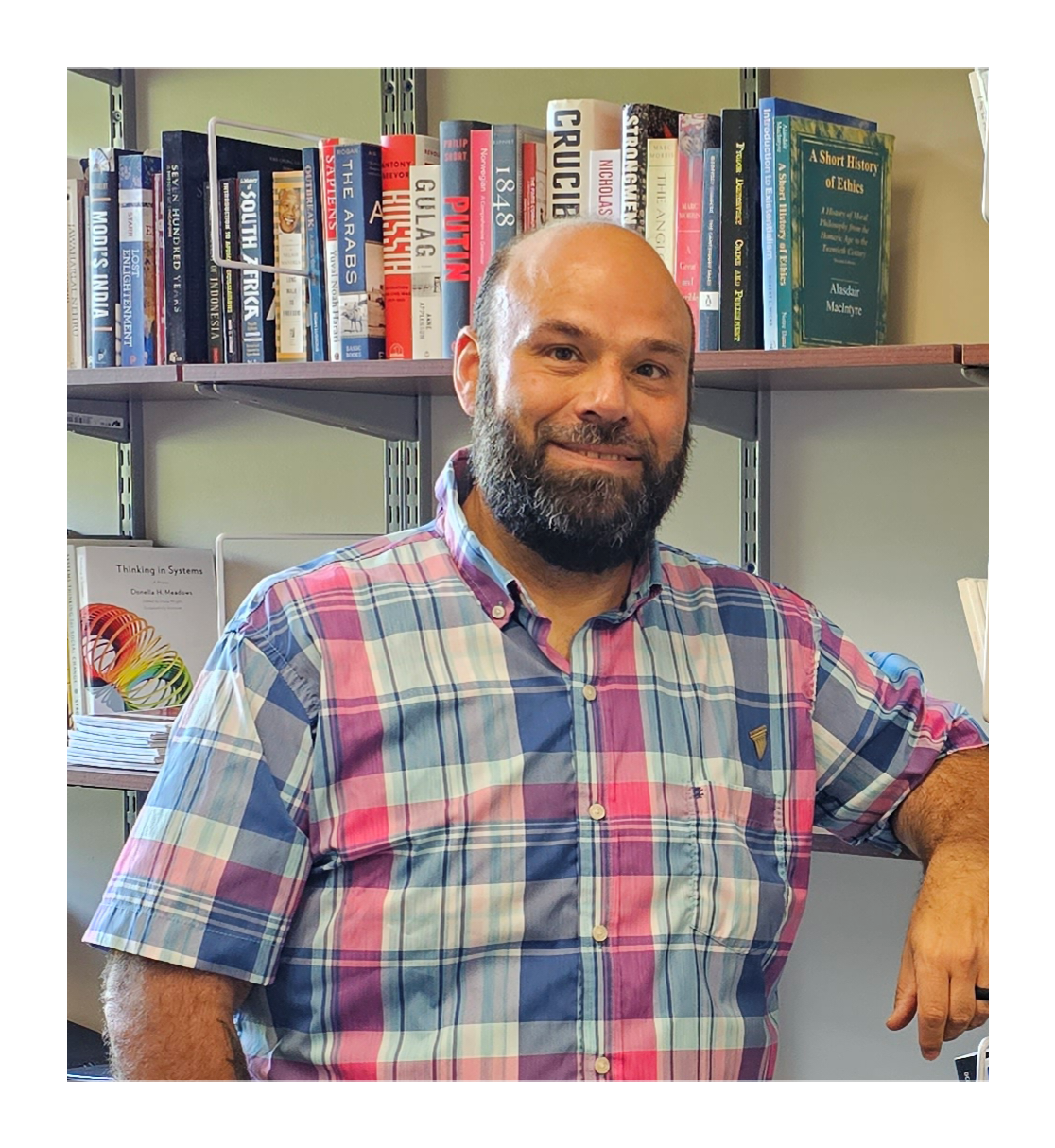
MAA Chair of Congress
Honors Program Director and Professor of Mathematics - Ferris State University
Term: July 1, 2024, to June 30, 2027
This Section Visitor is available to present on the following topics at Section meetings:
Using Data Science to Promote Genocide Resilience to Policymakers
Social scientists use data science algorithms to forecast and predict genocide. For example, the “Early Warning Project” uses a modified logistic regression to identify at-risk countries that are put on a watch-list. We propose to use data science to invite policymakers to strengthen their resilience to genocide. We proceed from the assumption that policymakers act in their self-interest. To that end, given an at-risk country or region, we seek to find previous genocide events that data suggests have similar profiles (which we call “nearest neighbors”) and use data-storytelling to tell a story about the impact of the event on those nearest neighbors. In this talk, we will share our progress toward such a program.
The Joy of Understanding Simple Things Deeply
There are mathematical principles we know and use, but rarely pause to wonder why they are true. Or maybe we don’t pause to think about their meaning. For example, why is the product of two negative numbers a positive? Why do we reverse the direction of an inequality when we multiply both sides by a negative? Why do the laws of exponents work and what do they tell us? We might find algebraic justifications, but that might mask the deeper, underlying meaning. One of Ed Burger and Michael Starbird’s Five Elements of Effective Thinking is “Understand Simple Things Deeply.” In this talk, I will apply this principle to the questions above as well as others, and together we will discover the joy waiting for us when we unpack what may appear mundane.
Reflections on Interdisciplinary Teaching Partnerships
Working with interdisciplinary partners to improve teaching is a rewarding experience and makes for better student learning environments. The SUMMIT-P consortium is an NSF-sponsored collection of 12 institutions where mathematics faculty are working with partner discipline faculty to revise and improve course offerings in the first two years of undergraduate education. Their work is based on research entitled “The Curriculum Foundations” conducted by the MAA Committee on Curriculum Renewal Across the First Two Years. In this talk I will share reflections on the SUMMIT-P experience, including both what we have done at Ferris and what has taken place at other institutions. I will also discuss ways other institutions could implement what we have learned from SUMMIT-P.
For more information about the Section Visitor program, please visit the Section Visitor webpage.